Binary fungi
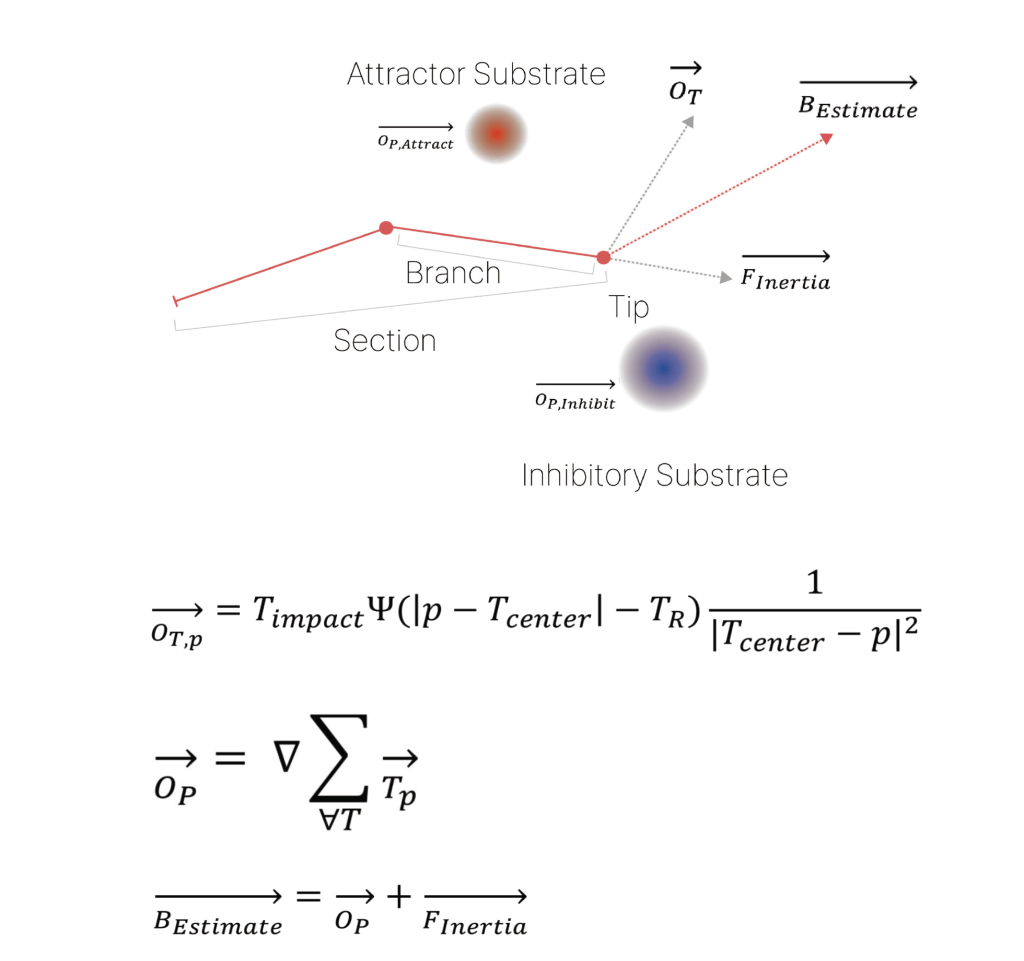
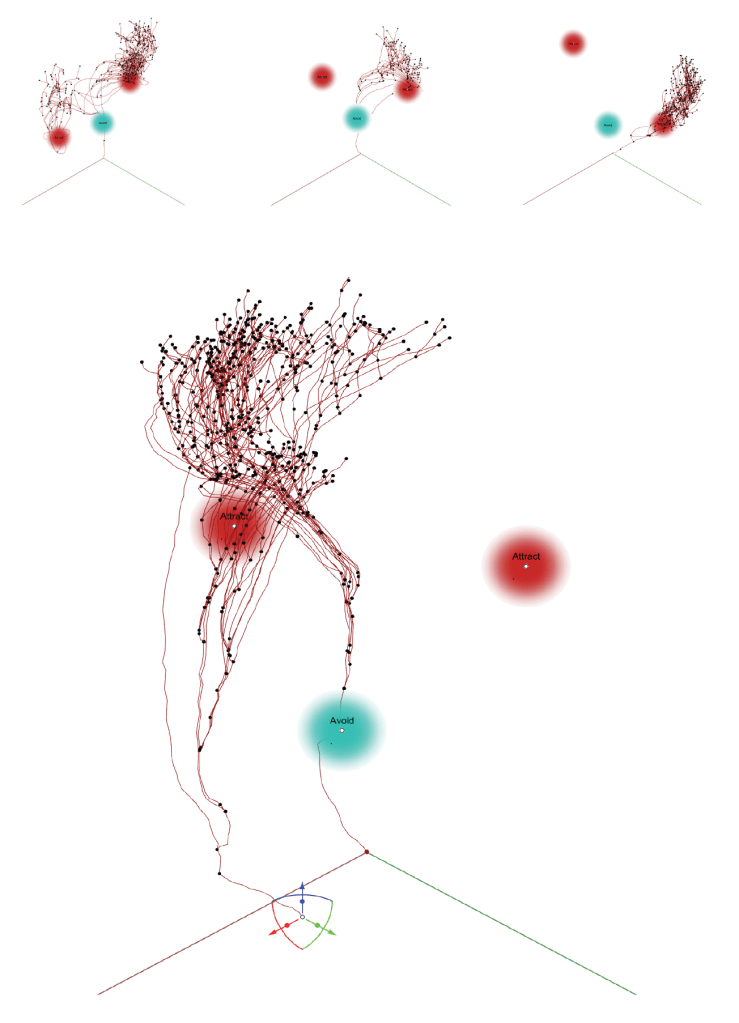
This is simulation result based on mathmaticla model of fungus growth. By position of substrate, the result become very different. In other word, it refers that the growth of fungus shows fexibility in design. The simulation is made by rasshopper and c# sript. Section is made as a class. For each epoch the tip of the section will grow or make a new branch by branch rate in possibility. In main function every tip of fungus calculates the summed for all substrates. To handle the real world, the random variable was added to grow function. In simulation fungus is growing aimlessly and orbit around the substrates. After the orbiting process, the fungi scatter through space and grows exponentially. Additionally, the complexity of this simulation is calculated as O(2^(1+p)) because the number of section grows by branch possibility.
EVAcuation plan
This simulation is designed under the premise that the use of small-scale nuclear reactors has become commonplace in Seoul. It aims to explore and model various evacuation strategies that could be implemented in the event of an accident involving these reactors. By considering multiple scenarios and potential outcomes, the simulation seeks to identify the most effective methods for safely evacuating people from affected areas. To achieve this, the program leverages the capabilities of Grasshopper for Rhino3D, a powerful tool for algorithmic modeling.

N-body Simulation
The relation between the earth and moon is easy to estimate. But as the participant of system become bigger than 2, the system become chaos. This simluation makes an animation for planet movement. The script is done with Python and Blender3d.Each planet is set as class that has a property of initial verlocity mass and size. The system moves with simple equation, which is law of univeral gravity.
Biological plausible network
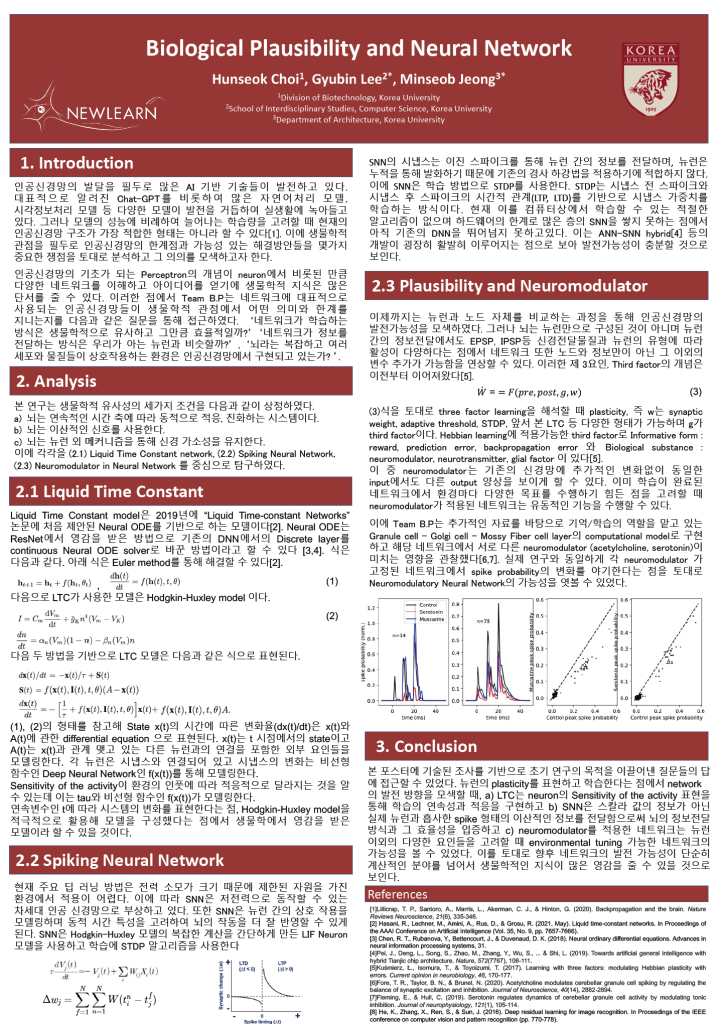
With the development of artificial neural networks leading the way, many AI-based technologies are advancing. Notably, including the well-known Chat-GPT, a variety of natural language processing models, visual information processing models, and others are evolving and integrating into everyday life. However, considering the increasing amount of training data proportional to the performance of these models, it can be argued that the current structure of artificial neural networks may not be the most suitable form[1]. Against this backdrop, this paper aims to analyze the limitations and potential solutions for artificial neural networks from a biological perspective, focusing on several key issues and exploring their significance.
 binary nature